
The challenges we face are global — and we address them through industry-wide knowledge sharing and strategic action. SGA meetups, member gatherings and panels bring together industry experts, members, and key stakeholders to share best practices and align on priorities.
SGA meetups bring together experts from across the industry and beyond to exchange insights, share knowledge, and explore best practices in emission reduction, sustainability compliance, and effective sustainable communication.
To empower the entire industry to decarbonize and reduce compliance costs, we make recordings of our past meetups publicly available, supporting open access to knowledge and best practices.
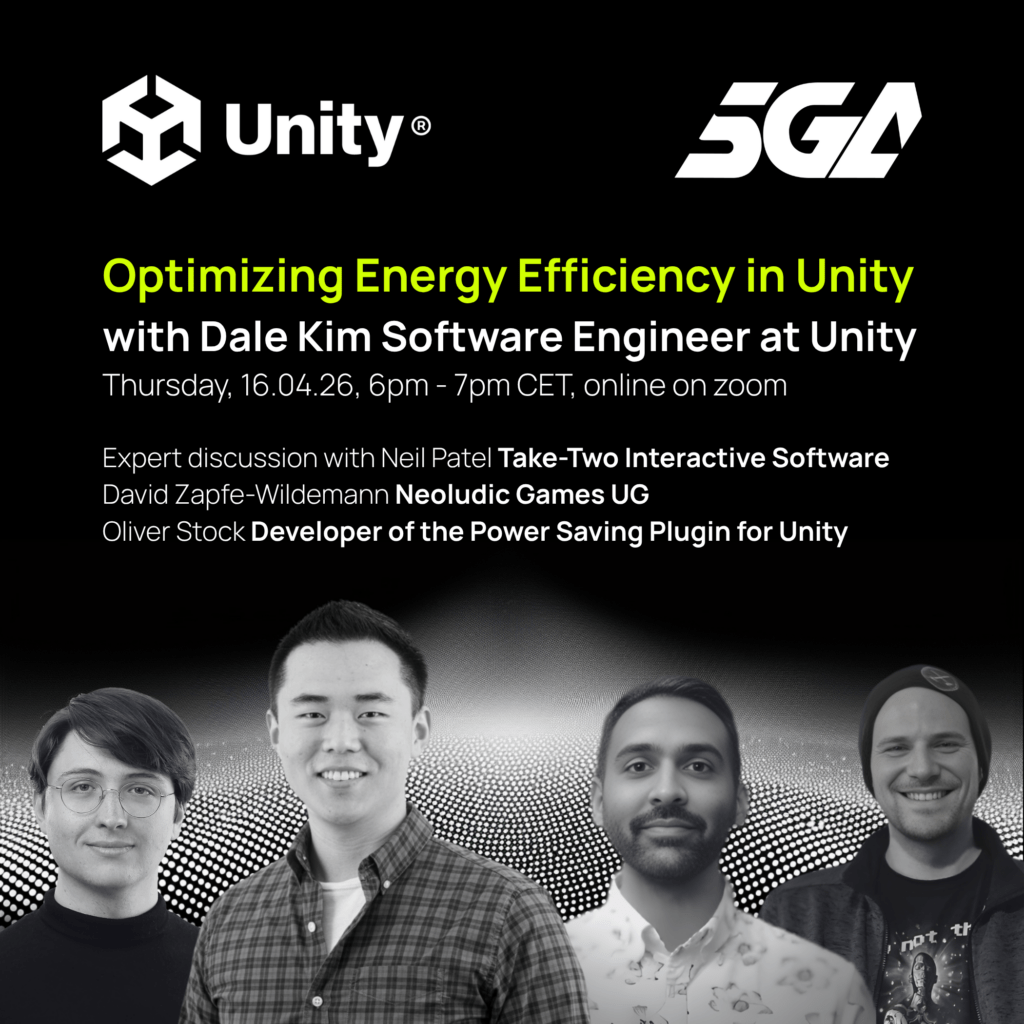
Optimizing Energy Efficiency in Unity with Dale Kim Software Engineer at Unity Technologies
Followed by an expert discussion with T2 and the makers of Tiny Bookstore and the Energy Saving Plugin for Unity
Thursday, 30th of April at 2pm – 3pm CET
This meetup gives participants a walkthrough of how to get energy savings by utilizing CPU Single Instruction Multiple Data (SIMD) instructions with Burst and Unity.Mathematics. Participants will be shown how to modify their code to take advantage of SIMD in a game-like example and the resulting performance and energy efficiency gains. By utilizing all of the available CPU hardware, you can have faster code that leads to lower energy consumption and longer play time.
The session will start with short keynote presentations by Dale Kim, Software Engineer at Unity Technologies followed by a discussion with David Zapfe-Wildemann, creator of Tiny Bookshop; and Oliver Stock, developer of the Power Saving Plugin for Unity, which will be lead by Neil Patel, VP of Sustainability at Take-Two Interactive Software.
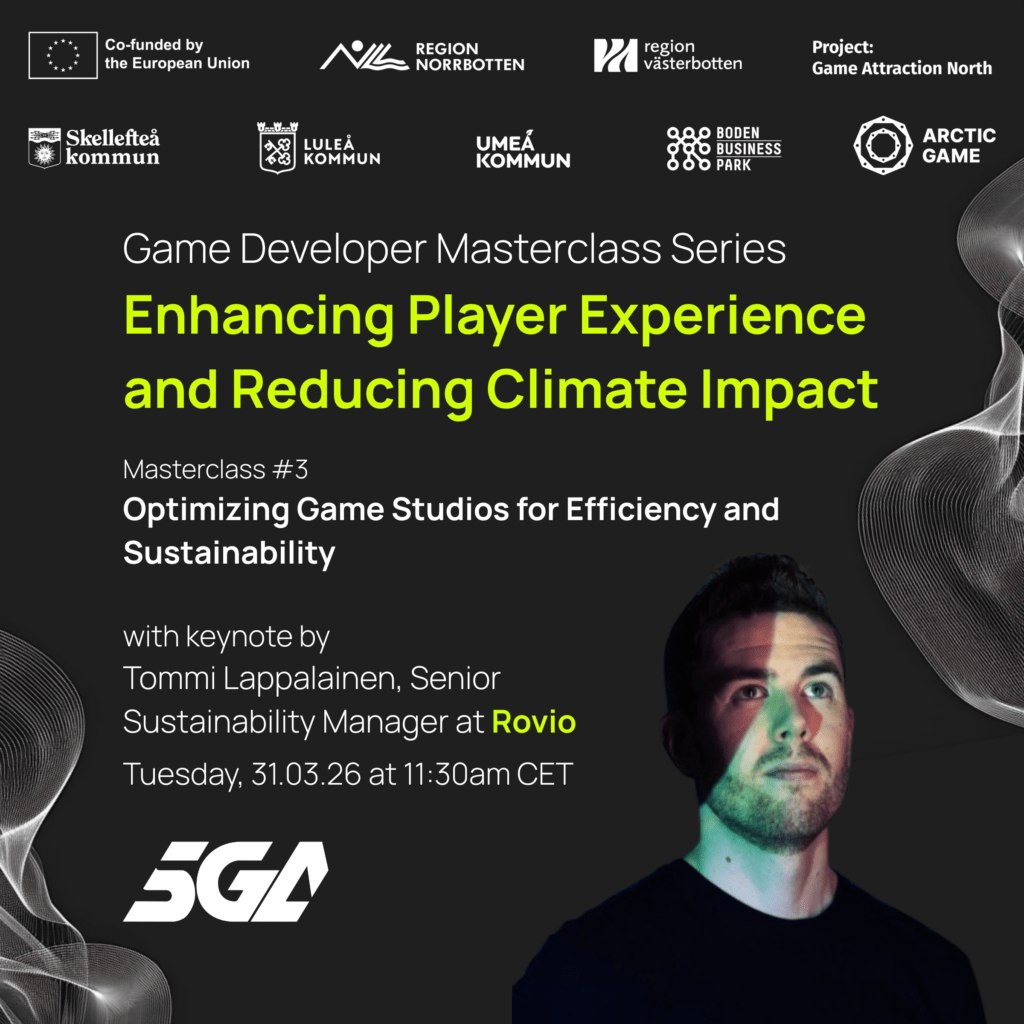
Optimizing Game Studios for Efficiency and Sustainability
Thursday 31st March, 11:30am – 12:30pm CET
This third session is designed to help studios improve the efficiency of their physical studio environment, whether that’s in an office or work-from-home. We will identify key focus areas for small-to-medium teams to reduce environmental impact and also gain insights into how their day-to-day activities affect sustainability.
Using accessible tools and ready-to-use templates, you’ll learn how to track and analyze climate impacts of studio energy consumption, IT Hardware purchases, business travel, and employee commuting.
By the end of the session, you’ll be equipped to:
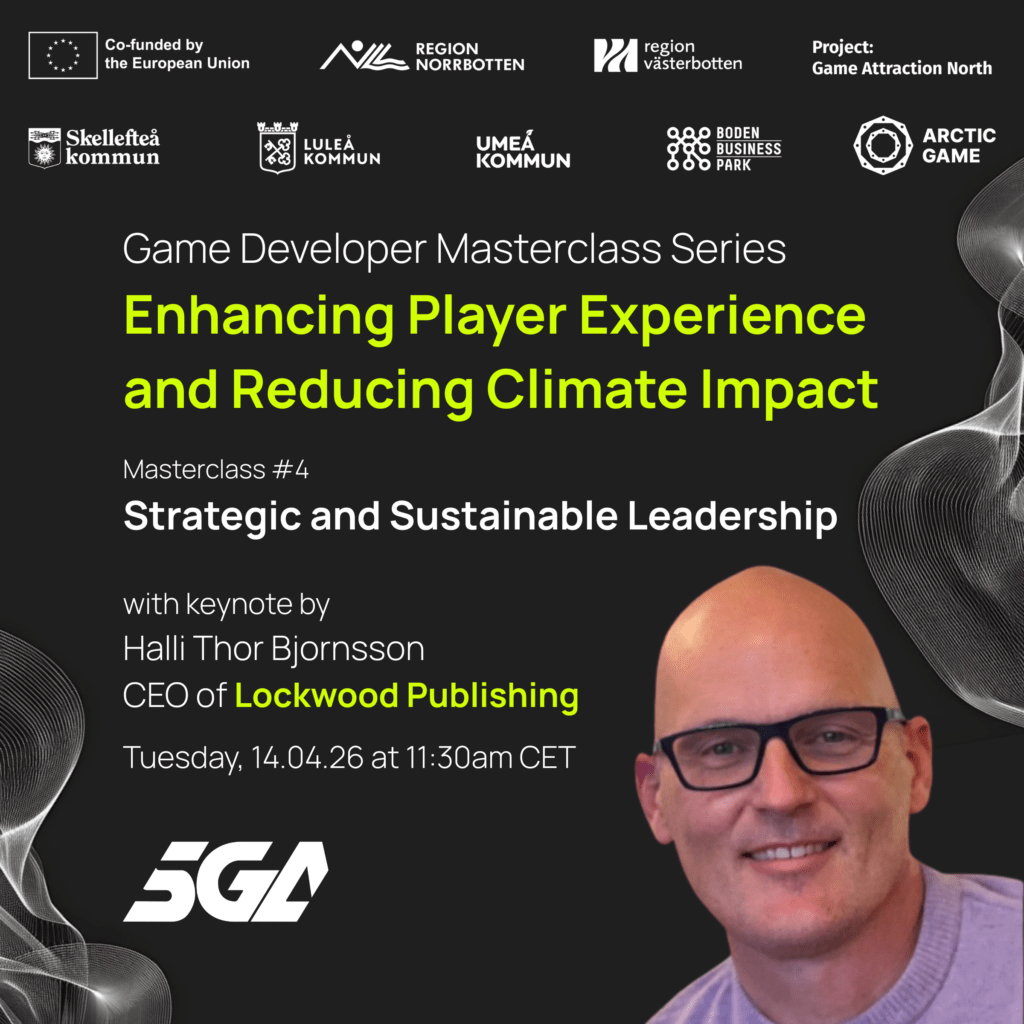
Strategic and Sustainable Leadership
Thursday 14th April 11:30am – 12:30pm CET
The final workshop explores how sustainability can be integrated into a company’s culture, leadership, and everyday routine — taking environmentally responsible game making from being a “nice to have” to being a core part of your culture and identity.
Participants will learn how aligning sustainability with core business strategies can enhance efficiency, improve resilience in the face of a changing climate, and contribute to long-term success by minimising risk. The session illustrates practical approaches to embedding sustainability into organizational processes, empowering teams, and fostering a purpose-driven workplace.
Key topics and questions explored include:
30.04.26 Optimizing Performance and Energy Efficiency: Examining the Power-Saving Godot Plugin by Ashe Foltin
07.05.26 Experts Discuss Optimizing Energy Efficiency in Unity: Energy Saving Plugin and Tiny Bookstore Best Practices
You’ll find more information about the events and the registration links on this site closer to the date. We also regularly post updates about our events on LinkedIn, so be sure to follow us to stay informed.
You will be informed about the current price of a share of the non-profit, when you apply for a membership via mail. Read our statute for details.
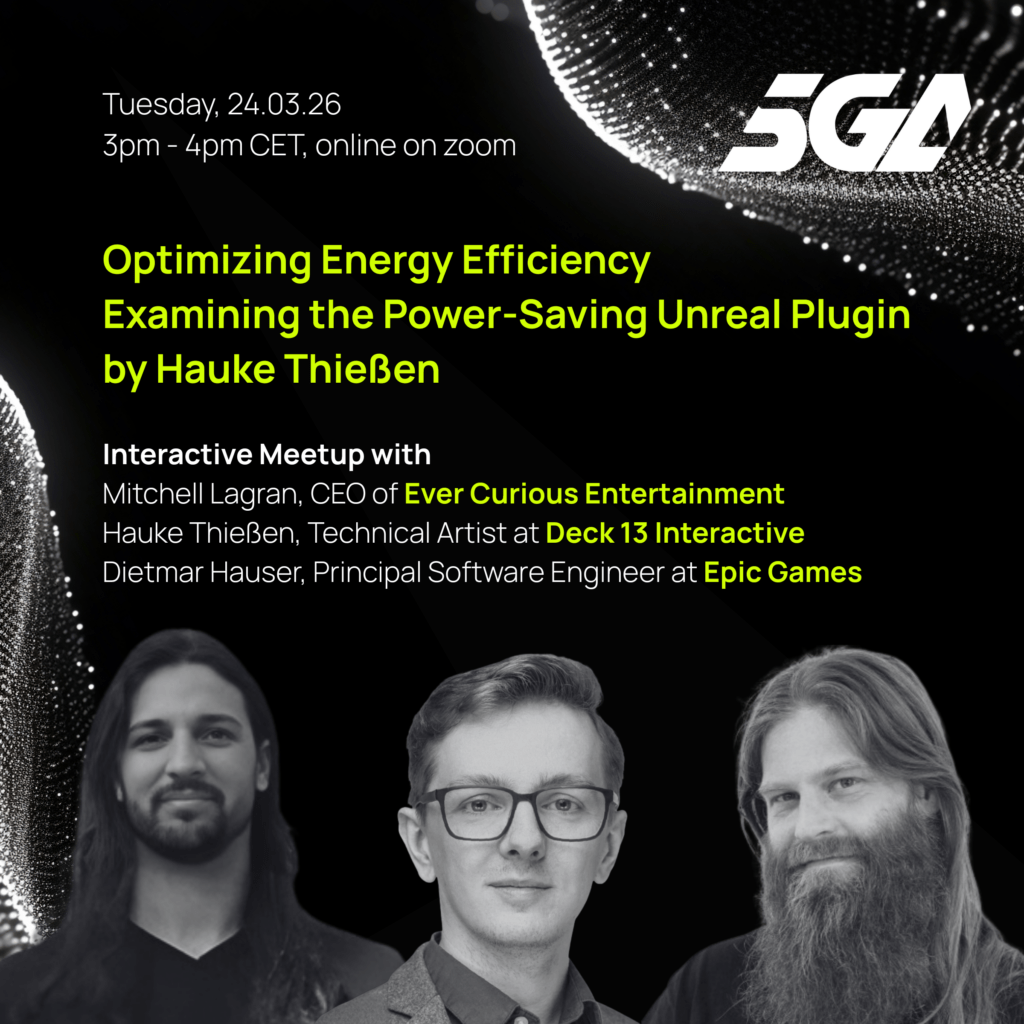
Optimizing Energy Efficiency: Examining the Power-Saving Unreal Plugin
Tuesday 24th March, 3pm – 4pm CET
This session focuses on the Power-Saving Unreal Plugin by Hauke Thießen (Technical Artist at Deck 13 Interactive), developed to optimize your game’s energy efficiency in a pragmatic and time-efficient way—without compromising the player experience. In fact, these optimizations can even enhance the player experience by improving battery life, reducing heat-induced slowdowns, and minimizing fan noise, making them a benefit for developers.
After a brief introduction to the Power-Saving Unreal Plugin by Hauke, Dietmar Hauser(Principal Software Engineer at Epic Games) and Mitchell Largan (CEO & Creative Director at Ever Curious Entertainment) will open the floor for discussion and questions with Hauke, diving deeper into the technical aspects, benefits, and practical implementation of the plugin.
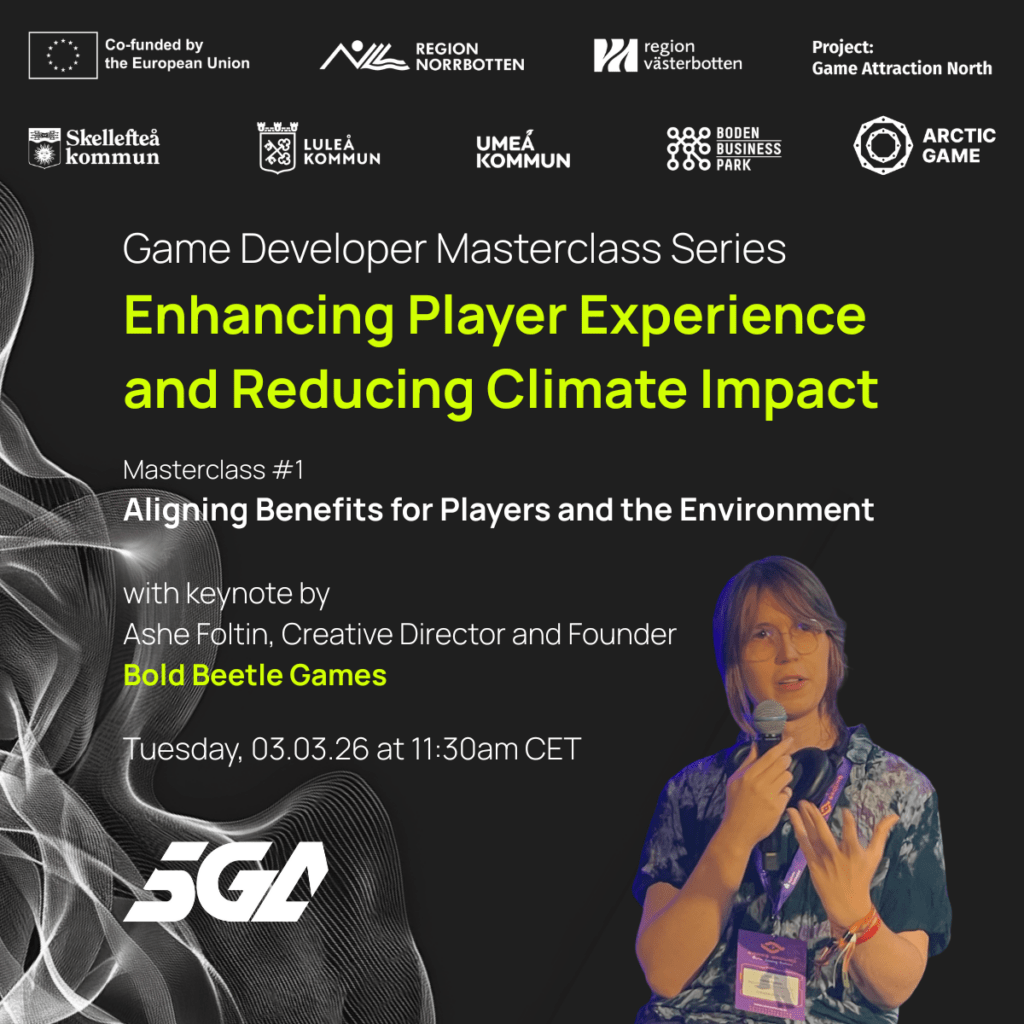
Aligning Benefits for Players and the Environment
Thursday 3rd March, 11:30am – 12:30pm CET
The opening workshop in this series is designed for game developers who want to understand where sustainability fits within the game industry, how big an impact it has on the planet, and what we can actually do about it. We will discuss how smart sustainability solutions can unlock better performance and improve the experience for players while reducing negative environmental impact. We’ll cover how developers can:
You’ll learn what sustainability actually means to game development and publishing—and why it’s not just a climate issue, but can also be a competitive advantage.
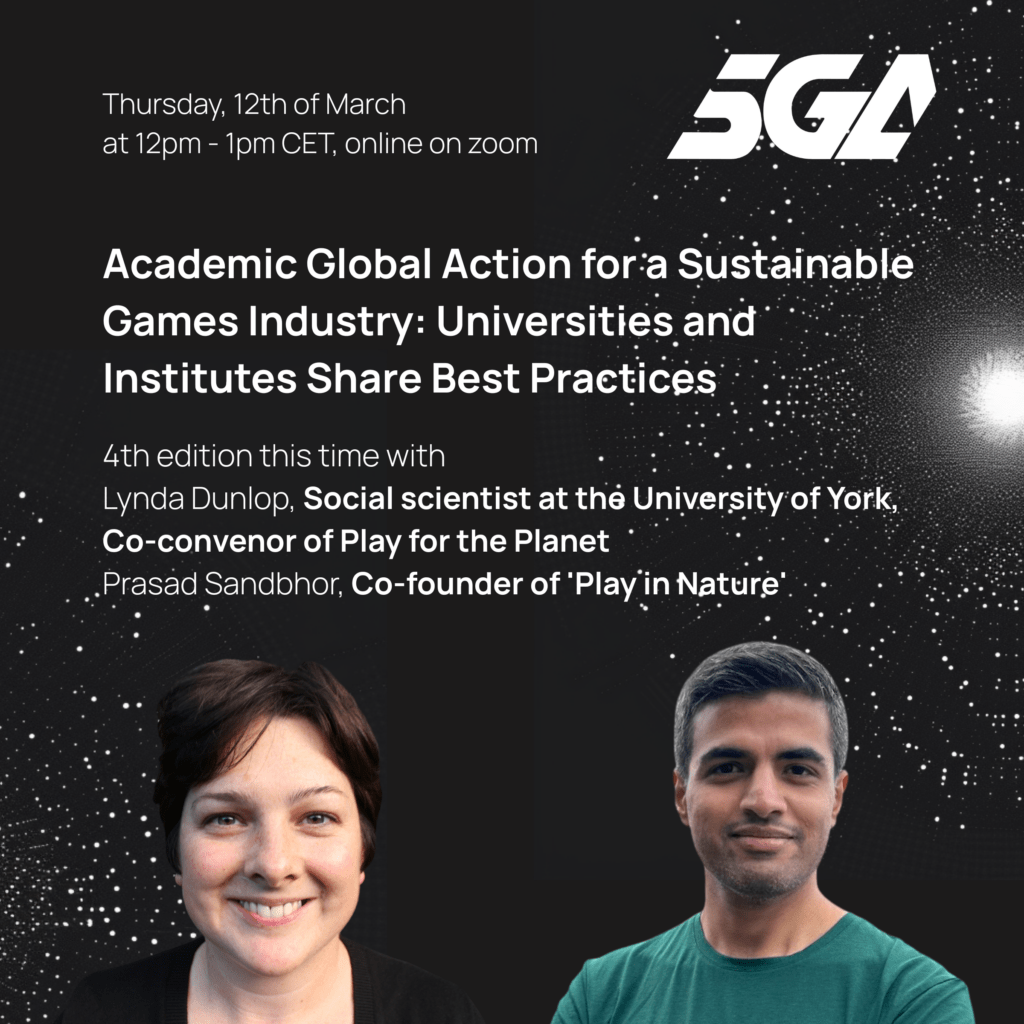
Academic Global Action for a Sustainable Games Industry: Universities and Institutes Share Best Practices
Thursday 12th March, 12pm – 1pm CET
In this meet-up we will hear about the work of the “Play for the Planet” network at the University of York, in the UK. The Play for the Planet Network is a collaborative initiative, bringing together game designers, researchers, and educators who are passionate about addressing planetary crises through the power of play. Their mission is to explore a diverse range of playful materials—such as digital games, interactive narratives, simulations, and more—as tools for modelling, stimulating discussion, fostering learning, and building connections. We delve into various forms of play, including digital, tabletop (board, card, and role-playing games), physical, and hybrid play, to discover how these mediums can create pleasure, enhance learning, aid decision-making, and deepen empathy towards people, places, and our planet.
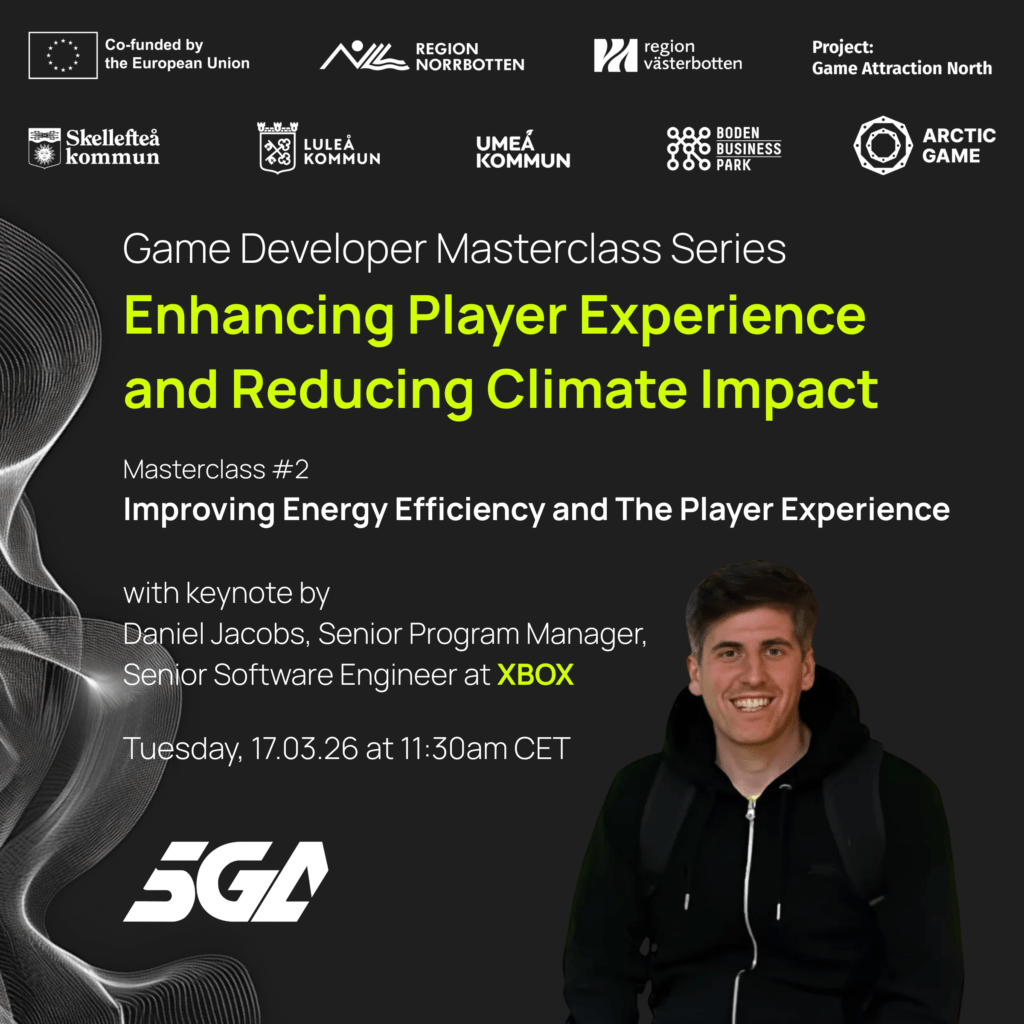
Improving Energy Efficiency and The Player Experience
Thursday 17th March, 11:30am – 12:30pm CET
In the second workshop, we dive deep into the details of powerful case studies from top game companies to show how they have successfully reduced power consumption and eased stress on players’ hardware load without sacrificing the player experience.
We talk through how to implement some of these solutions, and what the benefits are, particularly in making your game accessible to a wider audience, expanding your potential market to more players and devices. By the end of the session, you’ll know how to implement multiple types of sustainability best practices that optimise your game without compromising on quality.
Key questions addressed in the workshop include: